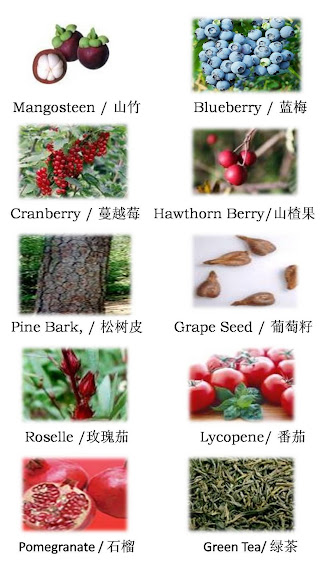

Ingredients: Extract of Mangosteen, Blueberry, Cranberry, Grape Seed, Pine Bark, Hawthorn Berry, Roselle, Lycopene, Pomegranate and Green Tea.
MANGOSTEEN
What are xanthones?
Xanthones are biologically active plant phenols found in a few select tropical plants. Current research on xanthones suggests they are beneficial in helping with many conditions including: allergies, infections (microbial, fungus, viral), cholesterol levels, inflammation, skin disorders, gastro-intestinal disorders, and fatigue.
Xanthones have been found to support and enhance the body's immune system. Xanthones also exhibit strong antioxidant activity which is beneficial for neutralizing free radicals in the body.
Facts about xanthones:
Xanthones, highly active plant phenols found in a limited number of plants, are among the most powerful antioxidants known to science. With 210 known xanthones in nature, over 40 have been discovered in mangosteen. Of all the known xanthones, the "beta mangostin" compound is one of the most studied and researched. What's remarkable is that it's not just the inner flesh of the mangosteen, but the whole fruit, that represents the single greatest known supply of these tremendously beneficial xanthones found anywhere in nature. The mangosteen has by far the most xanthones of any plant. The pericarp of the mangosteen fruit contains the vast majority of the xanthones.
Xanthones are some of the most potent antioxidants known. It is thought to be more potent than both Vitamin C and Vitamin E. In fact, many doctors refer to xanthones as "Super Antioxidants."
Xanthones are heat stable molecules. Unlike proteins, they won't denature or lose their structure when heated.
Benefit of Xanthones
Xanthones and xanthone derivatives have been shown to have beneficial effects on some cardiovascular diseases, including ischemic heart disease, atherosclerosis, hypertension and thrombosis. The protective effects of xanthones in the cardiovascular system may be due to their antioxidant, antiinflammatory, platelet aggregation inhibitory, antithrombotic and/or vasorelaxant activities. In particular, the antagonism of endogenous nitric oxide synthase inhibitors by xanthones may represent the basis for improved endothelial function and for reduction of events associated with atherosclerosis. Xanthones may also have anti-tumor activity.
The medical properties of the Mangosteen are well-documented by empirical laboratory, scientific, medical, and experiential methods. The Mangosteen fruit is not system-specific, but pan-systemic - in other words, good for the WHOLE body.
These free radical scavenger/fighters stop pain, reduce swelling and inflammation, and help in the body's healing process.
The "strong" antioxidants strengthen cell walls.
They kill bacteria, viruses, and fungus.
They stop the attack in DNA and even have restorative properties.
They help the body run as a complete, interrelated and integrated system.
They help the mind think better, adapt better, and give a sense of well-being (anti-depressant).
They stop the damage of brain cells so they grow and divide properly and help the cell walls and the neuro transmitters function properly.
They aid with Alzheimers, and all forms of memory loss.
They help in the battle against degenerative diseases like cancer, heart disease, diabetes, arthritis, and all forms of brain malfunctions.
They help the VISION process: cataracts, macular degeneration, glaucoma, and other forms of vision loss may be prevented.
"By controlling free radicals, antioxidants can make the difference between life and death, as well as influence how fast and how well we age." ~ Lester Packer, Ph.D., The Antioxidant Miracle
"There are few plants on the planet that influence the health and happiness of mankind in as many ways as mangosteen. In the last few centuries, the fruit of the mangosteen has been used for health. It has been talked about by the fortunate people of many continents." ~ Dr. Kenneth J. Finsand
BLUEBERRY
Antioxidants are thought to help protect the body against the damaging effects of free radicals and the chronic diseases associated with the aging process. Fresh fruits, including blueberries, and vegetables contain many of these naturally occurring antioxidants such as Vitamins C and E. In addition, blueberries contain anthocyanins and phenolics that can also act as antioxidants. Based on data from the USDA Human Nutrition Research Center on Aging (Boston, MA), blueberries are among the fruits with the highest antioxidant activity.
Blueberries, especially wild species, contain antioxidants which have been found to reduce the risks of some cancers[citation needed]. Researchers in Prince Edward Island have shown that blueberry tannins lower a protein involved in proliferation of cancer cells in vitro (Matchett and others, 2005). At the 2004 International Conference on Longevity was a report showing consumption of blueberries (and similar fruits including cranberries) may alleviate the cognitive decline occurring in Alzheimer's Disease and other conditions of aging.
CRANBERRY
Cranberry ( Vaccinium macrocarpon ) has been used as both a food and a medicine for centuries. It is native to North America and was used by Native Americans to treat bladder and kidney diseases. Early settlers from England learned to use the berry both raw and cooked for many ailments, including appetite loss, digestive problems, blood disorders, and scurvy (vitamin C deficiency).
Cranberry is best known as a preventive treatment for urinary tract infections (UTIs), commonly caused by bacteria known as Escherichia coli ( E. coli ). Originally, scientists thought cranberry worked by making urine acidic enough to kill the bacteria. Now, studies have shown that cranberry actually prevents bacteria from attaching to the walls of the urinary tract. Valid scientific studies support the use of cranberry (taken as a supplement or as juice) for preventing -- though not treating -- UTIs.
Medicinal Uses and Indications:
Urinary tract infections
Cranberry is used to prevent urinary tract infections of the bladder and urethra (the tube that drains urine from the bladder). Several studies indicate its effectiveness that cranberry juice significantly reduced the amount of bacteria present in the bladder and significantly reduced the recurrence of UTI.
Ulcers
A preliminary study suggests that cranberry may also prevent the bacteria Helicobacter pylori from attaching to stomach walls. H. pylori can cause stomach ulcers, so it is possible that cranberries may eventually prove to play a role in the prevention of this condition.
Heart disease
The antioxidants found in cranberry may protect from heart disease by lowering LDL ("bad") cholesterol, relaxing blood vessels, and preventing plaque from building up in arteries.
Cancer
In some test tube studies, cranberry appears to inhibit the growth of cancer cells.
Oral hygiene
Studies also suggest that cranberries may help prevent bacteria from adhering to gums and around the teeth, helping to prevent cavities.
GRAPE SEED ( OPC )
Professor Masquelier discovered that the bioflavonoid found more bioflavonoid oligomeric proanthocyanidins readily available in grape seeds and termed it OPC. Today, grape seeds prevail as the most abundant supplier of OPC around the globe. (contain about 95% OPC)
Grape Seed Extract (GSE) is a natural plant constituent (bioflavonoid) which strengthens and protects living tissue. The OPC components in GSE are 50 times stronger than Vitamin E and 20 times stronger than Vitamin C. Grape Seed Extract is an antiallergenic, antihistamine, anti-inflammatory, and antioxidant. It strengthens blood vessels, improves skin, and aids in circulation.
GSE is prescribed by doctors in several European countries for the prevention and treatment of a variety of health problems including cardiovascular disease, varicose veins, water retention, collagen damage and arthritis. Because it is used pharmaceutically, it has undergone a tremendous amount of testing. Grape Seed Extract is an extraordinarily safe and effective nutritional supplement.
OPC's from GSE easily cross the blood-brain barrier and prevent free radical damage to the brain and nervous system. Grape seed extract also improves blood viscosity (the same "magic" as red wine but without the calories, carbs or liver toxicity).
GSE (OPC's) binds to collagen and helps increase elasticity of skin, muscles, tendons and ligaments. Many people take grape seed extract as part of their skin rejuvenation program.
Grape Seed Extract has anti-histamine properties (it stabilizes the release of histamine from mast cells). Grape seed extract can be used like an antihistamine but without any of the typical drug-antihistamine side effects such as drowsiness.
GSE (OPC's) has been proven by over 25 years of clinical studies to be useful for:
stroke prevention (grape seed extract helps keep blood viscosity normal)
skin rejuvenation and/or wrinkle prevention (strengthens collagen)
arthritis and musculoskeletal complaints (antioxidant and strengthens collagen)
blood clot prevention (improves blood viscosity)
respiratory allergies (antihistamine)
food allergies (antihistamine)
asthma (antihistamine)
ADHD (many cases are allergy-related)
longevity and rejuvenation programs (blood viscosity and collagen-strengthening effects)
Recently, researchers discovered that Grape Seed Extract can help to stimulate healthy hair growth by defeating the hormone dihydrotestosterone (DHT) that stops the hair follicle growth cycle.
PINE BARK
Professor Masquelier later found that an abundant source of OPC (about 85%) was the bark of pine trees that grew on the coasts of southern France. Pine bark extract is a new nutritional supplement used for its antioxidant properties, which are believed to be effective for a wide range of healing and preventative purposes. Pine bark extract has been patented by a French researcher under the name Pycnogenol.
Pycnogenol plays a key role of repairing and protecting cells in the body. They help protect against free radicals, which are damaging by products of metabolism and exposure to environmental pollutants. Free radical damage is believed to contribute to aging, as well as too severe conditions including heart disease and cancer. Common antioxidants are vitamins A, C, E, and the mineral selenium.
Pine bark extract is used for its free radical fighting capabilities, and for a variety of conditions related to capillary health and permeability. It is synergistic with vitamin C which is more potent and absorbed more rapidly when used together with Proanthocyanidins.
Pine bark OPC has been indicated for:
poor distribution of microcirculatory blood flow in the brain and heart
altered capillary fragility and permeability ( in diabetes mellitus)
chronic arterial/venous insufficiency in the extremities
altered platelet aggregation and other characteristics of blood flow in capillaries
breakdown in the elastic fibers of the capillaries (collagen and elastin) due to free radical and enzyme action
microangiopathy of the retina, edema of the lymph nodes, varicose veins
the cumulative effects of aging and reducing the risk of degenerative diseases.
HAWTHORN BERRY
Hawthorn Berries contain vitamins C and B complex , crataegin, carotene, flavonoids and sugars. Considered a "cardiotonic" herb, the flowers and berries of the hawthorn plant have been used in traditional medicine to treat irregular heartbeat, high blood pressure, chest pain, hardening of the arteries, and congestive heart failure. Some of the medical benefits are:-
Hawthorn berry is "the great heart herb."
This flavonoid-rich fruit is tissue specific for the heart and vascular system. It strengthens these tissues and removes the inflammation.
It aids in dissolving lipid deposits, therefore increasing circulation.
Has vasodilating properties, which also aid in increasing circulation.
Use in high (hypertension) or low (hypotension) blood pressure cases.
Considered a cardiac tonic for all heart related issues.
Also used in cases of insomnia (consider adrenals as well).
Strengthens vascular walls, therefore excellent for regeneration of varicose and spiderveins, hemorrhoids and prolapsed conditions of the body.
Has strong antioxidant power to help remove acids from the body.
Hawthorn berry is an excellent anti-inflammatory and should be used in all cases of inflammation.
ROSELLE
Hibiscus (roselle) based infusions are rich in Vitamin C, A and beta-carotene. It is thought to be an excellent antioxidant and have a number of health benefits; it acts as an antiseptic, aphrodisiac, diuretic, sedative, tonic and is a folk remedy for abscesses, cancer, cough, debility, dyspepsia, fever, hangover, hypertension and neurosis. Researchers are now conducting studies to see if hibiscus is also active in lowering blood cholesterol levels. It has been suggested that its high antioxidant content contributes to lowering low density lipoprotein levels in the blood.
LYCOPENE
Lycopene is a member of the carotenoid family of chemical substances. Lycopene, similar to other carotenoids, is a natural fat-soluble pigment (red, in the case of lycopene) found in certain plants and microorganisms, where it serves as an accessory light-gathering pigment and to protect these organisms against the toxic effects of oxygen and light. Lycopene may also protect humans against certain disorders, such as prostate cancer and perhaps some other cancers, and coronary heart disease. People who have diets rich in tomatoes, which contain lycopene, appear to have a lower risk of certain types of cancer, especially cancers of the prostate, lung, and stomach.
The health benefits of Lycopene:
1. Cancer risk reduction:
Lycopene has been shown to suppress the growth of tumors in in vitro (test tube) and in vivo (animal) experiments. One of the ways that lycopene may limit tumor growth is by stimulating cell to cell communication. Researchers now believe that poor communication between cells is one of the causes of the abnormal growth of cells, a condition which ultimately leads to the development of cancerous tumors.
2. Most powerful anti-oxydant :
The health benefits of lycopene are attributed primarily to its powerful antioxidant actions. In fact, laboratory experiments indicate that lycopene is a more effective antioxidant than other carotenoids, including beta-carotene. Lycopene is especially effective at quenching a free radical called singlet oxygen. Singlet oxygen is a highly reactive free radical formed during normal metabolic processes that reacts with polyunsaturated fatty acids, which are major constituents of cell membranes. Due to the fact that lycopene is commonly located in cell membranes, it plays an important role in preventing oxidative damage to the membrane lipids, thereby influencing the thickness, strength, and fluidity of the membranes. Cell membranes are the gatekeepers of the cell, allowing nutrients in, while preventing toxins from entering and facilitating the removal of cellular garbage. Maintaining the integrity of cell membranes is a therefore key factor in the prevention of disease.
3. Stimulate immune system:
Boost the immune system in those undergoing cancer therapy. Lycopene and beta-carotene, taken along with vitamins C and E, may help protect the body against the effects of chemotherapy or radiation. Both procedures can damage healthy cells as they attack cancer cells.Thwarts the growth of cancerous tumors, causing them to become less malignant. Cancer researchers at the Karmanos Cancer Institute in Detroit, Michigan were shocked to discover this finding upon the conclusion of their study.
4. Preventing prostate cancer:
Study conducted by Harvard researchers examined the relationship between carotenoids and the risk of prostate cancer. Of the carotenoids, only lycopene was clearly linked to protection. The men who had the greatest amounts of lycopene (6.5 mg per day) in their diet showed a 21% decreased risk of prostate cancer compared with those eating the least. This report suggests that lycopene may be an important tool in the prevention of prostate cancer.
5. Reducing the risk of chronic disease:
Lycopene is also believed to play a role in the prevention of heart disease by inhibiting free radical damage to LDL cholesterol. Before cholesterol can be deposited in the plaques that harden and narrow arteries, it must be oxidized by free radicals. With its powerful antioxidant activity, lycopene can prevent LDL cholesterol from being oxidized.
6. Skin protection:
Lycopene in combination with other carotenoids may help to reduce sunburn. Dr. Yoav Sharoni of Ben-Gurion University, reported that oral lycopene had a protective effect against UV skin damage, which suggested a potential inverse connection between lycopene and skin cancer. He explained that while sunscreens provide external protection from damaging UV rays, antioxidants like lycopene in the diet might provide internal protection from sunburn.
7. Infertility:
Recent research has suggested that lycopene can boost sperm concentrations in infertile men. In one study, a lycopene-supplemented diet resulted in a statistically significant improvement in sperm concentration and motility amongst the 30 infertile men being studied with six pregnancies following as a result of the trial.
8. Cervical cancer
A team of cancer researchers from the University of Illinois (Urbana) found that women who regularly consumed lycopene had a five times lower risk of developing pre-cancerous conditions of the cervix.
POMEGRANATE
Pomegranate fruits contain polyphenols, tannins and anthocyanins - all are beneficial antioxidants. Interestingly, pomegranate juice contains high levels of antioxidants - higher than most other fruit juices, red wine or green tea.
Ischemic Heart Disease
A new study, just published in the September 2005 edition of the American Journal of the College of Cardiolgists, examined the effect of pomegranate juice on patients with ischemic heart disease. Researchers found that in patients drinking pomegranate juice, oxygen deficiency to the heart during exercise was signfiicantly reduced suggesting increased blood flow to the heart.
Potential Benefits For Erectile Dysfunction (ED)
A study published in the July 2005 edition of the Journal of Urology, entitled “Oxidative Stress in Arteriogenic Erectile Dysfunction: Prophylactic Role of Antioxidants,” examined the effects of long term intake of pomegranate juice on erectile dysfunction (ED) in an animal model. The results suggest for the first time that free radicals (oxidative stress) are a contributing factor in erectile dysfunction. As a result, pomegranate juice may be of benefit through an antioxidant mechanism.
Antioxidant Activity
A study appearing in the journal, Drugs under Experimental and Clinical Research (2002), entitled “Pomegranate Juice Flavonoids Inhibit Low-Density Lipoprotein Oxidation and Cardiovascular Diseases: Studies in Atherosclerotic Mice and in Humans,” summarized the antioxidant and cardiovascular benefits of pomegranate juice. The research included data showing that pomegranate juice has higher polyphenol content than red wine, grape juice, cranberry juice cocktail, blueberry juice and orange juice. Pomegranate juice also showed a greater ability to inhibit LDL oxidation than the other beverages.
Cardiovascular Health
Five studies demonstrating a beneficial effect of pomegranate juice on cardiovascular health have recently been published in a number of scientific journals. These studies concluded that pomegranate juice:
1. significantly increased levels of nitric oxide;
2. reduced arterial plaque by 30 percent;
3. inhibited ACE by 36 percent and reduced systolic blood pressure;
4. reduced expected plaque build up in mice by 44 percent; and
5. reduced expected plaque build-up by 17 percent in advanced atherolsclerosis.
Neonatal Benefits
Traumatic births, such as those where the umbilical cord is wrapped around the neck, can cause a lack of oxygen to the baby’s brain, and result in minimal to extensive brain damage and disability. Free radicals play a large role in causing this damage. Since antioxidants neutralize free radicals, POM Wonderful researchers examined whether the high levels of polyphenol antioxidants found in pomegranate juice could help protect against brain damage to babies undergoing traumatic birth. In a study published earlier this year in Pediatric Research, the investigators found that supplementing the mother with pomegranate juice was neuroprotective for the neonatal brain.
Pomegranates have been consumed by man since before recorded history. We are now beginning to understand how beneficial this product’s juice may be to human health.
GREEN TEA
Eight Main health functional benefits:
1. Protecting Aging Brains
Green tea catechin polyphenols, known to be effective scavengers of free radicals, are believed to play a role in various cellular mechanisms related to neuroprotective activity. Researchers increasingly suspect catechins may be deeply involved in the activation of survival genes and in cell signaling pathways, as well as in the regulation of healthy cellular metabolism. As a result, catechins are receiving significant attention as therapeutic agents for the treatment of neurodegenerative diseases involving brain regression and aging progress.
2. Protecting Against Cardiovascular Disease
Results from human studies over the past few decades show that green tea consumption is correlated with lower levels of cholesterol, thus modulating one risk factor for cardiovascular disease. Green tea catechins reduce atherosclerosis through antioxidant effects and by lowering blood lipid levels. Green tea also helped improve levels of dangerous low-density lipoprotein (LDL) as well as the ratio of LDL to HDL (high-density lipoprotein). Supplementation with green tea was found to be equally effective at human-equivalent doses.
3. Healthy Blood Sugar Levels
Green tea may help to normalize and maintain healthy blood sugar levels. Epidemiological data suggest that green tea consumption prevents type II diabetes. In healthy human volunteers, green tea promoted healthy glucose metabolism, as determined by oral glucose tolerance tests. Green tea also lowered blood glucose levels without affecting serum insulin levels. Green tea therefore appears to have anti-hyperglycemic effects. Green tea may be a helpful agent in preventing type II diabetes and in promoting healthy glucose metabolism.
4. Weight control management
EGCG may trigger weight loss by stimulating the body to burn calories and decreasing body fat. The findings appear in the January issue of the American Journal of Clinical Nutrition.
5. Tooth decay (dental caries)
Compounds present in green tea have been shown to inhibit the growth and activity of bacteria associated with tooth decay. Human volunteers rinsing with an alcohol extract of tea leaves before bed each night for four days had significantly less plaque formation, but similar amounts of plaque-causing bacteria compared with those with no treatment.
6. Anti-Cancer Effects Confirmed
Green tea catechins have been shown to prevent cancer in the following ways:
a) They help to neutralize dietary carcinogens such as nitrosamine and aflatoxin.
b) They interfere with the binding of cancer-causing agents to cellular DNA, thereby protecting cells against mutations that can eventually cause cancer.
c) They protect against free-radical DNA damage that causes some cancers.
d) They inhibit bacterial-induced DNA mutations that also can lead to certain cancers.
e) They work with enzymes and other antioxidants in the intestine, liver and lungs to prevent the activation of certain carcinogens before they damage DNA.
f) They protect against the effects of ionizing radiation and ultraviolet radiation.
Green tea has been shown to counteract both the initiation and promotion of carcinogenesis. Some studies have shown that green tea blocks the formation of certain tumors.
7. Skin whitening and UV protection
In a study conducted at Case Western Reserve University, topical application of EGCG to human skin produced several beneficial effects. When applied before ultraviolet exposure, EGCG significantly blocked UVB-induced infiltration of leukocytes, a major cause of the generation of reactive oxygen species. The EGCG application also reduced redness in the skin related to UVB exposure. Skin that was pretreated with EGCG demonstrated lower levels of inflammatory prostaglandin metabolites than skin that was not treated. These prostaglandins are known to play a critical role in the generation of free radicals and the promotion of skin tumors. The study researchers concluded that EGCG from green tea extract may be useful as a topical agent for protecting against UVB-induced carcinogenesis, photo aging, and inflammatory skin conditions.
8. Improves indigestion
Green tea has been used traditionally to relieve inflamed or irritated mucous membranes of the digestive tract. Since heartburn sometimes involves reflux of stomach acid into the esophagus, the anti-inflammatory properties of EGCG are also useful. In addition, EGCG appears to promote normal digestion. EGCG may reduce intestinal cramping and ease the irritation and inflammation associated with diarrhea.
主要成份:山竹、蓝梅、蔓越莓、葡萄籽、松树皮、山楂果、玫瑰茄、番茄、石榴、绿茶等萃取物
自由基与氧化
自由基是指含有未配对的电子的原子、分子或基团,由于自由基中含有未成对电子,具有配对的倾向,状况不稳定,具有高度的活性。自由基若要稳定必须向邻近的原子或分子夺取电子而使自己的电子成对,但也因此使得电子被夺的那个原子或分子成为新的自由基,引发连锁反应。这个过程就是“氧化”。
在正常情况下,人体内的自由基是处于不断产生与清除的动态平衡之中。自由基产生过多或清除过慢,它通过攻击生命大分子物质及各种细胞,会造成机体在分子水平、细胞水平及组织器官水平的各种损伤,加速机体的衰老进程并诱发各种疾病。
自由基与疾病
1、肿瘤-自由基攻击DNA,导致细胞遗传信息的转变。
2、心脑血管疾病-自由基可以使脂质过氧化,导致动脉硬化。
3、免疫力低下-自由基可以破坏细胞结构,影响细胞发挥正常的免疫功能。
4、白内障-是自由基攻击晶状体产生。
5、老年性痴呆-是自由基侵犯脑细胞和神经所致。
研究证实,至少有70种以上的疾病与自由基有关。可以说,自由基是“万病之源”。
关于抗氧化
抗氧化物的定义为“任何以低浓度存在就能有效抑制自由基的氧化反应的物质”,其作用机理可以是直接作用在自由基,或是间接消耗掉容易生成自由基的物质,防止发生进一步反应。
人体在不可避免地产生自由基的同时,也在自然产生着抵抗自由基的抗氧化物质,以抵消自由基对人体细胞的氧化攻击。研究证明,人体的抗氧化系统是一个可与免疫系统相比拟的、具有完善和复杂的功能的系统,机体抗氧化的能力越强,就越健康,生命也越长。
山竹 (Mangosteen )
山竹果肉中含有大量的營養素,包括了抗氧化劑、可溶性固形物、葉酸、檸檬酸、泛酸、多種的維生素B1、B2、C4和礦物質,對提升人體免疫力有極佳的效果,另外還有抗癌、降低心血管疾病和抗感染等特殊的療效。而一般認為維生素C和E,是最主要抗氧化的幫手,但是山竹中所含的大量及多種的「氧雜蒽酮」(Xanthones)成份,更是值得一提。因為在己被發現的200多種「氧雜蒽酮」中,山竹是唯一含有40種以上的水果,而「氧雜蒽酮」則是比維生素C和E,更具有超強力的抗氧化作用。當然這種抗酸化物質對於心肌梗塞,或是腦梗塞的形成原因,有極佳、顯著的抑制作用。
最近,当代科学也开始对山竹难以置信的丰富营养价值及全面的、改善健康的特性青睐有加。例如,现在我们知道了山竹含有许多维生素和微量矿物质。山竹还含有下列化合物:多糖、醌、芪和酮。 这种植物化合物的组合在自然界中是极为少见的。
由于抗氧化性很强,这类特殊的植物营养成份价值很高,具有生物活性且非常独特。从自然界已知的酮的来源来看,山竹果中所含的酮的量是最高的。在山竹果中已经识别出三十多种不同类型的酮,其中研究最多的是“β 倒捻子素 (beta mangostin)”。 初步研究表明,β 倒捻子素和山竹果中可能含有的一些其它种类的酮,具有非常有效的生命支持特性。
山竹中的磷、镁、硫元素含量特别高,钙、锌、铜、铁和锰等有益元素含量也很高。微量元素不仅对人体的正常生长和发育起着积极作用,而且对人体的其它生命活动也有着极为重要的作用。由于微量元素不能在人体内自行合成,必须通过平常的饮食摄取来补充,而山竹有益元素的含量较为丰富,且可被人体吸收利用。
磷、镁、硫和钙都是人体内的常量元素,主要以无机盐的形式存在,具有重要的生理功能,对人体细胞代谢、生物合成和生命功能的维持起着重要作用,为维持人体的生长发育所必需。
硫是重要的营养元素,进入人体的硫经过一系列的代谢过程,绝大部分最终成为无机硫酸盐、硫酸酯及中性硫进入血液循环,对人体是必不可缺的。
镁与体内各种生理功能有关,参与300种以上酶反应。许多营养学家认为,镁是抗衰老的武器,是一种保护青春的矿物质,缺乏镁会有早衰和早逝的危险,镁的这种抗衰作用表现在它对心脏有特别的保护作用,并且还发现了它的防癌抗癌作用。
磷和钙绝大部分都存在于骨骼和牙齿中,余下小部分主要分布于细胞的内外。当缺乏钙和磷或钙磷代谢紊乱时,骨骼就不能正常生长,骨质也不坚固,易造成儿童的佝偻病及成年人骨质疏松症。
山竹中锌的含量也很高。锌是人体必需的营养元素,是人体生长和发育的一种极其重要的微量元素,它是酶的重要组成部分,对人体免疫系统和防疫功能具有重大作用。缺锌会造成免疫系统和功能的严重失调,可引起免疫缺陷,使细胞免疫和体液免疫发生异常,可导致肠系膜淋巴结、脾脏、胸腺质量明显下降。而锌又能阻碍细胞膜脂质的过氧化作用,所以肝细胞等能受到锌的保护而免受损伤。而引起侏儒症、糖尿病、高血压、生殖器及第二性征发育不全、男性不育等疾病的原因之一也与体内锌缺乏有关。山竹中含有丰富的人体生长发育所必需的锌元素及其它微量元素,若经常食用,能增强人体的免疫能力,促进人体内的新陈代谢,达到防病健身之功效。
蓝莓(Blueberry)
蓝莓(Blueberry)学名越橘 ,属于杜鹃花科越桔属植物。果实呈蓝色,并披一层白色果粉,果肉细腻,果味酸甜,风味独特,营养丰富。VC含量是苹果的几十倍,被誉为“浆果之王”。蓝浆果中的抗氧化能力和有特殊作用的化合物能够防御自由基的氧化作用。
日本的研究人员显示蓝浆果有助于眼睛的毛细血管的完整性而减少斑点退化变性,进而有保护视力的作用。
蓝浆果还是一种高纤维食品,145g蓝浆果中至少含有2.9g纤维,因此可以作为日常饮食中纤维的良好来源。蓝浆果还是一种低热量的食品,1/2杯蓝浆果仅含42卡路里的热量。在日本和美国都将蓝浆果列于抗癌食品的首位。 美国最有影响的健康杂志《Prevention》称蓝浆果为“神奇果”。1999年另一家非常受欢迎的杂志《Eat Well》把蓝浆果评为“年度水果”。
可明显地增强视力,消除眼睛疲劳;营养皮肤;延缓脑神经衰老;对由糖尿病引起的毛细血管病有治疗作用;增强心脏功能;预防老年痴呆。 正是由于蓝莓的营养及药用功能,使得国际粮农组织将其列为人类五大健康食品之一。
蓝莓中的花青素抗自由基氧化能力是维生素C的20倍,是维生素E的50倍,尤其是其体内活性,更是其他抗氧化剂无法比拟的。
蓝莓的果胶含量很高,据许多研究显示,果胶这种可溶性的纤维质可降低胆固醇,减少得冠状动脉疾病的机率,进而预防心脏病发作及中风。
蓝莓含有相当多的钾,钾能帮助维持体内的液体平衡,正常的血压及心脏功能。
蓝莓果实中的花青素(anthocyanins)可以帮助预防动脉内斑块的形成和多种癌症.
蓝莓具有杀死感染性大肠菌的特质,更可帮助控制腹泻不止,预防体内功能紊乱和许多老年疾病的发生。
蔓越莓 ( Cranberry )
赶走泌尿道的感染
长久以来,蔓越莓最广为人知的功能是:预防泌尿道感染,一天喝十盎司的蔓越莓汁作为预防措施。 蔓越莓里的多酚类-和维生素A相关的浓缩丹宁,它们可能包围大肠杆菌,让细菌无法攀附於尿道内侧的感受体上。再不然,丹宁也可以堵住感受体本身,使细菌根本毫无空间侵入。不管它们利用哪一种方法,结果都是细菌只能悄悄的滑过,无法逗留下来制造感染。因此你不用像服用抗生素那样,必须先设法增强抵抗力。
以此类推,假使蔓越莓能够阻止大肠杆菌黏上尿道壁,那么应该也可以阻止口腔里的细菌附着在牙齿上,防止牙菌斑的形成。
美国加州尔湾市的加州大学研究结果显示,蔓越莓汁还可以抵御其他种类的细菌,包括葡萄球菌和沙门氏菌的感染。
台拉维夫大学的科学家则发现,蔓越莓萃取物可以阻绝引起胃溃疡的幽门螺旋杆菌。
蔓越莓还可以防止心脏疾病的发生。根据威斯康辛大学拉可诺斯分校的实验,具有抗氧化功效的红色青花素,似乎能阻止「坏」胆固醇的氧化作用。实验中,花青素减少了血小板的凝结。这很重要,因为使血液变稀的效果,就能降低血液凝块的风险,减少心脏病发作。
蔓越莓甚至有助於预防乳癌。在动物实验中,已发现蔓越梅含有一种最强的抗癌成份:没食子酸盐(EGCG)。科学家说,只要很少的份量,它就能起很大的作用。
由美國Scranton大學的Joe A. Vinson 博士 研究指出, 蔓越莓含有非常高含量的生物黃酮, 它們是一種非常強力的抗自由基物質, 由Vinson博士的研究比較了美國常見的20多種天然蔬果, 結果發現了蔓越莓所含的生物黃酮量最高。
由於生物黃酮的對抗自由基效果, 它可能對於預防心血管老化病變, 癌症的發生與進展, 老年癡呆, 皮膚老化等具有很好的效果, 科學家指出經常食用多種青菜水果者的皮膚較好, 也較不容易得到心臟病和癌症, 就是生物黃酮所發揮的抗老化與抗自由基的效果。
葡萄籽 ( Grape Seed )
近几年来,科学家们发现,葡萄籽中含有一种多酚花青素(OPC含量高达95%),可以有效的消除万病之源-自由基,接下来一连串的生化研究都发现这个原本是人类不要的天然物质,竟然是保健预防疾病的仙丹。其实自然界的天然物质中,具抗氧化作用的成分很多,举凡众所皆知的维他命C、E、胡萝卜素等,根据实验结果显示,葡萄籽萃取物的抗氧化效果约为维他命C的10-20倍不等(针对不同的自由基会有不同的抗氧化效果),脂溶性维他命E的10-50倍。
葡萄籽OPC原花青素的特性:
葡萄籽OPC在人體內有百分之八十的生物利用性,一個人在服用葡萄籽OPC 20分鐘後,他的血液裏會出現OPC的存在,並能維持72小時之久
葡萄籽OPC是水溶性的物質,必須每天不斷的補充才能維持血液中總有足夠的葡萄籽OPC來保持健康。
葡萄籽OPC裏最重要的成份是含95%的花色素,花色素是一種生物類黃酮(Bioflavonoids), 是超強的抗氧化劑,而且完全沒有副作用。
葡萄籽OPC抗氧化程式是維生素E的50倍,維生素C的20倍。
葡萄籽OPC主要療效:
清除自由基,超強的抗氧化劑:能防治八十多種因自由基引起的疾病。
抗癌:防治乳癌,子宮癌,皮膚腫瘤,延緩癌細胞的誘變,讓癌細胞胎死腹中。
保護血管:尤其強化毛細血管,阻止血小板凝結,防止動脈硬化,心臟病,化解中風危機。
防治靜脈曲張,靜脈抽筋,靜脈炎、肺栓寒等。
保護細胞DNA,延緩老化。
消炎退腫,減輕腿部或腳踝的腫脹,治療關節炎。
改善腦部記憶力,防止老人癡呆症。
預防及治療糖尿病、神經系統退化,肝機能失調。
預防心臟病,修復中風後引起的身體損傷。
治療糖尿病性視網膜症。
治療花粉熱,乾草熱、哮喘、流鼻涕、眼睛癢等過敏症。
防止皺紋出現,維持皮膚的彈性及光滑。
防治胃炎及胃潰瘍。
松树皮 ( Pine Bark )
松树皮提取物Pycnogenol(其中含有约85%的OPC)用于提高血管的抵抗力,降低毛细血管的脆性和渗透性。这是OPC的第一个明确适应症。在随后的实际应用中,欧洲的医生们从他们的病人所反馈的信息中获得,OPC的功能并不仅仅局限于血管系统疾病,它对诸如花粉过敏、关节炎、胃溃疡等疾病同样也具有明显的疗效。
Pycnogenol是一种“黄酮”类抗氧化物。就抗氧化与抗自由基的原理来说,它与维他命市场中的老祖宗如维他命E、C、beta-carotene或是最近受到重视的绿茶、葡萄籽、红酒一样,都是以抗自由基来作用,而这一类的多酚黄酮(bioflaviod)物质也是普遍存在于一般食用植物的花青素中。比较特殊的是,除了这些常见的花青素与黄酮素之外,Pycnogenol另外含有了40种以上的有机酸,如桂酸、丁烯二酸、香草酸等。比起一般植物只有两三种,它在抗氧化的保健上面有非常大的功效。
不少专家指出,抗氧化剂的前景十分诱人。从保健角度说,天然抗氧化剂已确定至少有三方面的作用:一是抗衰老;二是抗人体心脑血管疾病;三是对神经系统的慢性退行性疾病如老年痴呆症均有较好疗效。甚至他还可能预防肿瘤的发生,减少糖尿病的发病率。
Pycnogenol的功效:
松树皮提取物的抗氧化能力来自原花青素OPC,OPC作为著名抗氧化剂可有效压制自由基作用,而自由基在变性性疾病,心血管疾病,视力模糊,晒伤和早衰等方面发挥着重要的作用。
心血管疾病
研究确认松树皮OPC可有助于加强毛细血管,动脉和静脉的强度,可稳定血管壁,抑制炎症,并主要支持含胶原质和弹性蛋白的组织。
a) 由于OPC的卓越抗氧化功能,其可消除自由基如同胶原酶和弹性蛋白酶 般对动脉壁的伤害,从而防止或修复动脉硬化。
b) 通过加强毛细血管强度和降低毛细血管渗透性,OPC能降低静脉功能不全的疼痛和水肿, 治疗静脉功能不全(静脉曲张)。OPC能通过修补受损流失液体的血管和淋巴管以加快消除水肿。
c) 视网膜病变/提升视力,OPC加强毛细血管强度和降低渗透性的能力对饱受中风和视网膜病变困扰的患者非常有效。OPC已被证实可有效改善因糖尿病,动脉硬化,炎症和衰老导致的视网膜病变。
衰老/阿兹海默症
因为OPC能轻易通过血脑屏障,有效抑制自由基对大脑组织的伤害,由此可以有效防止和改善阿兹海默症。
护肤
由于其抗氧化能力,OPC被认为能保护皮肤免受多余紫外辐射和自由基伤害。大量证据表明OPC保护并加强了皮肤中的胶原质和弹性蛋白,因此防止皱纹产生和保持皮肤弹性。
抗癌,抗炎症和抗过敏
因为自由基在肿瘤形成过程中起着重要的作用,OPC可适量使用以发挥其抗癌功效。同时由于其有效抑制发炎因子如PG, 5-HT和白三烯类等,并选择性与关节部的结缔体素结合以缓解疼痛和水肿。
山楂果 ( Hawthorn Berry )
山楂,又名山里红、红果、胭脂果,有很高的营养和医疗价值。因老年人常吃山楂制品能增强食欲,改善睡眠,保持骨和血中钙的恒定,预防动脉粥样硬化,使人延年益寿,故山楂被人们视为“长寿食品”。
营养功效
山楂能防治心血管疾病,具有扩张血管、增加冠脉血流量、改善心脏活力、兴奋中枢神经系统、降低血压和胆固醇、软化血管及利尿和镇静作用。
山楂酸还有强心作用,对老年性心脏病也有益处。
它能开胃消食,特别对消肉食积滞作用更好。很多助消化的药中都采用了山楂。
山楂有活血化淤的功效,有助于解除局部淤血状态,对跌打损伤有辅助疗效。
山楂对子宫有收缩作用,在孕妇临产时有催生之效。并能促进产后子宫复原。
山楂所含的黄酮类和维生素C、胡萝卜素等物质能阻断并减少自由基的生成,能增强机体的免疫力,有防衰老、抗癌的作用。
山楂中有平喘化痰、抑制细菌、治疗腹痛腹泻的成分。
玫瑰茄 (Roselle)
玫瑰茄的花含有丰富的维生素C,有清凉降火、生津止渴的功效,功能包括:
天然利尿剂,帮助排出滞留水分。
帮助减低血压的黏稠度,促进血液循环。
促进皮肤健康亮丽,美容养颜,减少暗疮和皮肤问题。
含天然抗氧化剂,防止细胞损坏,减少肝脏因氧化而受损
番茄红素 ( Lycopene )
番茄红素是类胡萝卜素的一种,最早是从番茄中分离出来而得名。类胡萝卜素是高效抗氧化剂,能够破坏纯态氧和抑制自由基的高度氧化活性,这两种活性氧可以和DNA、蛋白质和脂类反应,引起肿瘤、心血管病和其他老年性疾病。番茄红素的抗氧化能力是β-胡萝卜素的3.2倍,是维生素E的100倍。番茄红素为天然类胡萝卜素,抗氧化能力是维生素E的100倍,可以有效清除人体内有害自由基,延缓衰老。
1.辅助抑制肿瘤
番茄红素具有超强的抗氧化性,可以保护正常细胞DNA免受氧化损伤,防止细胞突变成肿瘤细胞;番茄红素可以促进自身免疫细胞的增殖,增强巨噬细胞、细胞毒性T细胞和天然杀伤肿瘤细胞的能力,吞噬消灭肿瘤细胞;番茄红素可以通过吸收进入血液和淋巴等各种腺体,俘获转移游离的肿瘤细胞,防止肿瘤的复发和转移。
2.延缓衰老
番茄红素是自然界中发现的最强的抗氧化剂,人体组织细胞被自由基氧化变性,导致细胞死亡是衰老的根本原因,番茄红素可以最有效消除自由基,从而保持细胞正常代谢,预防衰老。
3.提高精力和肌体免疫力
番茄红素在体内经过小肠粘膜吸收进入血液和淋巴,分布到人体的肾上腺、胸腺和前列腺等器官,促进这些腺体分泌激素,从而保持充沛的精力,增强抵抗疾病的能力。提高免疫能力。番茄红素作为抗氧化剂,可明显减轻由体内过氧化引起的对淋巴细胞DNA的氧化损害、减缓动脉粥样硬化形成等功能,它的作用是维生素E的100倍。单线态氧和自由基是人类衰老的最主要原因,也与人体的免疫能力有关。番茄红素能保护吞噬细胞免受自身的氧化损伤,促进T、B淋巴细胞增殖,刺激效应T细胞的功能,增强巨噬细胞、T细胞杀伤肿瘤细胞的能力,减少淋巴细胞DNA的氧化损伤,以及促进某些白介素的产生。实验表明,摄食番茄的人群中,淋巴细胞在体外用过氧化氢处理,DNA的损伤可降低33%和42%。
4.预防前列腺癌
研究发现,番茄红素可降低前列腺癌的发病几率,哈佛医学院的一项研究表明,番茄红素降低前列腺癌风险效果显著,高达21%。最近的研究表明,日常食用含番茄红素的口服补充剂可以减缓前列腺癌的生长。中年男性育前列腺组织中番茄红素的含量逐渐降低,这个现象与男性前列腺肥大有非常重要的关联。并发现,有效补给适当剂量的番茄红素,可以帮助减缓前列腺肥大及发生癌变。食用大量番茄红素的人,患前列腺癌的风险比较低。已有研究数字表明,血液中番茄红素含量较高的男性比血液中番茄红素含量低的男性患此类癌症的机率大大减少。
5.预防心脑血管疾病
番茄红素可以防止自由基对血管的损伤,减少心脑血管疾病的风险。一些研究人员指出,由于番茄红素能够保护低密度脂蛋白免受氧化破坏调节胆固醇的代谢,因而有可能预防心血管疾病的发生。荷兰学者对心肌梗塞患者皮下脂肪中的类胡萝卜素含量测定发现,病人的番茄红素含量低于健康人,而且β-胡萝卜素含量也比正常人体显著降低,说明这几种类胡萝卜素都与心肌梗塞的发生密切相关;研究证实,服用天然的番茄红素能使血清胆固醇降低,用番茄红素预防高胆固醇或高血脂症,可以减缓心血管疾病的发展。另有研究发现,未接受降脂治疗的高脂血症患者,其血清番茄红素和α-胡萝卜素浓度都低于正常人。
6.保护人体皮肤免受伤害
番茄红素的抗氧化作用,可以有效抑制脂质、蛋白质、酶、DNA的氧化损伤。如番茄红素能保护皮肤免受紫外光的损伤,当皮肤受到紫外光照射时,皮肤中的番茄红素能优先与自由基结合,从而保护皮肤中的组织及细胞避免因氧化而损伤。研究人员给10名健康妇女各补充28mgβ- 胡萝卜素和2mg番茄红素1~2个月,结果使紫外线引发红斑的面积和程度减小;最近研究发现,限制紫外线照射可使皮肤中番茄红素浓度下降31%~46%,由此推断,皮肤中的番茄红素起着防紫外线作用,也可能参与了防御皮肤致癌的过程。
7.影响人类生殖功能
科学实验表明,番茄红素能够提高男子精子的质量。实验发现,23岁到45岁的不育男性每天口服番茄红素2次,每次2mg,实验3个月后,检查受试者精子的浓度、活动力和形状,发现都很良好,口服番茄红素,在治疗原因不明的男性不育症方面具有正面的效应。
8.乳房和子宫保健
Ben-Gurion大学的研究人员所做的最新研究发现,将番茄红素与其他抗氧化剂合理运用,可以促进女性乳房的健康发育,并减少患乳腺癌的机会。美国依利诺斯大学的一项对比研究发现,体内番茄红素低的女性比体内番茄红素高的女性,宫颈癌的发病率要高出5倍以上。
石榴 ( Pomegranate )
石榴的营养特别丰富,含有多种人体所需的营养成分,果实中含有维生素C及B族维生素,有机酸、糖类、蛋白质、脂肪,以及钙、磷、钾等矿物质。据分析,石榴果实中含碳水化合物17%,水份79%,糖13~17%,其中维生素C的含量比苹果高1~2倍。
另外,石榴汁含有多种氨基酸和微量元素,有助消化、抗胃溃疡、软化血管、降血脂和血糖,降低胆固醇等多种功能。可防止冠心病心病、高血压,可达到健胃提神、增强食欲、益寿谈话派延年之功效,对饮酒过量者,解酒有奇效。
石榴可谓全身是宝,果皮、根、花皆可入药。其果皮中含有苹果酸、鞣质、生物碱等成分,据有关实验表明,石榴皮有明显的抑菌和收敛功能,能使肠黏膜收敛,使肠黏腊的分泌物减少,所以能有效地治疗腹泻、痢疾等症,对痢疾杆菌、大肠杆菌有较好的抑制作用。另外,石榴的果皮中含有碱性物质,有驱虫功效;石榴花则有止血功能,且石榴花泡水洗眼,还有明目的效果。
绿茶 (Green Tea )
八大功能:
1.抗衰老
绿茶所含的抗氧化剂有助于抵抗老化。因为人体新陈代谢的过程,如果过氧化,会产生大量自由基,容易老化,也会使细胞受伤。SOD(超氧化物歧化)是自由基清除剂,能有效清除过剩自由基,阻止自由基对人体的损伤。绿茶中的儿茶素能显著提高SOD的活性,清除自由基。
2.抗菌
研究显示,绿茶中儿茶素对引起人体致病的部分细菌有抑制效果,同时又不致伤害肠內有益菌的繁衍,因此绿茶具备整肠的功能。
3.降血脂
科学家做的动物实验表明,茶中的儿茶素能降低血浆中总胆固醇、游离胆固醇、低密度脂蛋白胆固醇,以及三酸甘油酯之量,同時可以增加高密度脂蛋白胆固醇。对人体的实验表明则有抑制血小板凝集、降低动脉硬化发生率。绿茶含有黄酮醇类,有抗氧化作用,亦可防止血液凝块及血小板成团,降低心血管疾病。
4.瘦身减脂
绿茶含有茶碱及咖啡因,可以经由许多作用活化蛋白质激酶及三酸甘油酯解脂酶,减少脂肪细胞堆积,因此达到减肥功效。
5.防龋齿、清口臭
绿茶含有氟,其中儿茶素可以抑制生龋菌作用,减少牙菌斑及牙周炎的发生。茶所含的单宁酸,具有杀菌作用,能阻止食物渣屑繁殖细菌,故可以有效防止口臭。
6.防癌
绿茶对某些癌症有抑制作用,但其原理皆限于推论阶段。对防癌症的发生,多喝茶必然是有其正向的鼓励作用。
7.美白及防紫外线作用
专家们在动物实验中发现,绿茶中的儿茶素类物质能抗UV-B所引发之皮肤癌。
8.可改善消化不良情况
近年的研究报告显示,绿茶能够帮助改善消化不良的情况,比如由细菌引起的急性腹泻,可喝一点绿茶减轻病况。